
A new study reveals that achieving net-zero emissions involves more than just reducing greenhouse gases; it necessitates considering the broader environmental consequences of the technologies and resources employed. Different clean energy pathways exert varying pressures on mineral, land, and water resources, highlighting the need for a balanced approach to decarbonisation that addresses overall environmental sustainability.

Mining major Vedanta has invested over $1 billion in net-zero transition initiatives for FY26, focusing on renewable energy, lower-carbon fuels, energy efficiency, and technology-led interventions to drive its decarbonisation efforts.

A new study reveals that green hydrogen's potential as a sustainable fuel is contingent on the rapid decarbonisation of energy grids worldwide.

Amazon has announced plans to invest an additional $7 billion in renewable energy projects in India by 2030, building on its existing USD 4 billion commitment. This new investment will fund four major wind and solar projects with a combined capacity of 934 megawatts, making Amazon a leading corporate purchaser of carbon-free energy in the country.

A BloombergNEF report indicates India will miss most of its 2030 electric vehicle electrification targets, except for three-wheelers, despite rapid market growth. The report highlights the need for stronger policies and investments to accelerate the transition, detailing projections for various vehicle segments, fuel consumption changes, and infrastructure requirements to achieve net-zero goals.

Three years after India declared its goal to become a net-zero economy by 2070, the policy design for achieving the target has begun, with the NITI Aayog forming dedicated multi-sectoral committees to prepare a transition plan. In 2021, India joined a select group of nations that set a target year for becoming net-zero carbon economy. At COP26 in Glasgow, Prime Minister Narendra Modi outlined a five-pronged 'Panchamitra' climate action target for India and committed to a net-zero target by 2070, joining nations like the US, the UK, and China.

Data infrastructure company NetApp has introduced Novus, a new storage architecture designed for large-scale AI factories, alongside significant enhancements to its AI Data Engine, hybrid multi-cloud operations, and strategic partnerships with Nutanix and SAP. These initiatives aim to improve data management, security, and efficiency for AI workloads and enterprise cloud infrastructure.

'Every mission is judged at the point where the State meets its citizens. What citizens expect from us is simple -- they expect to be heard, to receive a decision in real-time, and to be treated with dignity whatever their circumstances.'
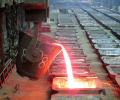
The Indian government has approved a Rs 2,814 crore capital expenditure support scheme to promote domestic processing of critical minerals like lithium and nickel. This five-year scheme, running until 2030-31, aims to reduce import dependence, develop value chains, and enhance India's self-reliance in essential materials for clean energy and modern technologies. It includes a 30% capital subsidy for setting up processing plants.

The climate finance battle once again exposes the deep divide between rich and developing nations.

Despite a significant increase in the number of individual tax filers declaring Long Term Capital Gains (LTCG) from 0.75 million in AY20 to 3.8 million in AY24, they still represent only about 5% of all individual tax filers in India. This data fuels the ongoing debate about potential LTCG tax relief, especially for foreign portfolio investors.
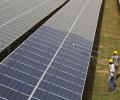
For India to reach its bold target of having net-zero emissions by 2070, the country's solar power capacity would have to rise to over 5,600 GW, coal use particularly in the power sector will have to drop by 99 per cent by 2060 and crude oil would need to peak by 2050 and fall substantially by 90 per cent in the two decades thereafter, CEEW India has said. Prime Minister Narendra Modi on Monday surprised delegates at the COP26 climate summit with a bold pledge to cutting emissions at the world's third-biggest emitter to net-zero by 2070. Council on Energy, Environment and Water, a Delhi-based not-for-profit policy research institution, said, "The economic cost of India's net-zero 2070 transition (would be) over USD 13,000 billion between 2030 and 2100."

Andhra Pradesh Chief Minister N Chandrababu Naidu announced several new initiatives for Tirumala Tirupati Devasthanams (TTD), including Aadhaar-based devotee insurance for Rs 2 lakh, the establishment of an SV Museum by TCS Trust, and the introduction of electric buses donated by Reliance Foundation and Bharat Biotech. The plans also include global expansion of Srivari temples, improved Annadanam, integrated hospital services, and significant infrastructure development in Tirupati to make it a services and wedding destination with a Net Zero concept.

India is set to develop its first 100% hydrogen-powered Direct Reduced Iron (DRI) plant, a Rs 207-crore national pilot project led by CSIR-IMMT. This initiative aims to significantly reduce carbon emissions in the steel sector and achieve net-zero commitments, focusing on adapting the technology to India's domestic iron ore conditions.

India will require a total investment of $10.1 trillion to achieve net-zero emissions by 2070, while the nation could face a shortfall of $3.5 trillion, a study by CEEW Centre for Energy Finance (CEEW-CEF) said. At the recently concluded COP26, Prime Minister Narendra Modi announced India's aim to achieve net-zero emissions by 2070. "India would need cumulative investments of $10.1 trillion to achieve net-zero emissions by 2070, according to an independent study released today by the CEEW Centre for Energy Finance (CEEW-CEF)," a statement said.

Focuses on meeting non-traction demand through renewables.

The Central Board of Indirect Taxes and Customs (CBIC) has issued new guidelines for GST officers, mandating year-wise demand breakdowns in multi-year notices, clarifying registration procedures, and streamlining export rules to reduce litigation and improve taxpayer clarity.

India is caught in a no-man's land, not cheap enough for value investors to pile in but not growing fast enough to attract growth investors either, asserts Akash Prakash.

Mobile phone retailers across India, represented by AIMRA, are protesting the 0.4% Merchant Discount Rate (MDR) on UPI transactions exceeding Rs 2,000 for merchants. They plan to observe 'No UPI Day' on October 2, 2026, arguing that this fee will significantly impact their income and burden small businesses, advocating for a continued Zero MDR structure for UPI merchant payments.

The IDBI Bank stake sale could generate over Rs 26,500 crore, helping the government surpass its annual divestment target, notes A K Bhattacharya.
New research from the University of Sheffield indicates that greenhouse gas emissions from petrochemical production could increase by 50 per cent by 2050 under a business-as-usual scenario. The study, published in Nature Sustainability, provides the first detailed global map of these emissions, identifying key sources and highlighting the challenge of decarbonising the sector.

'In the past, when the Indian markets have been flat for two years, the next year's returns have ranged between 5 per cent and 55 per cent.'

Maruti Suzuki Chairman R C Bhargava is pushing for increased government incentives for biogas-powered vehicles over hybrids, emphasising their net-zero carbon emissions and the valuable organic manure they produce, while also advocating for continued GST benefits for electric vehicles.

External Affairs Minister S Jaishankar stated that the world is entering an age of flux marked by conflicts and tariff volatility, requiring India to respond effectively to these challenges. He reiterated India's consistent stance on the Russia-Ukraine conflict, advocating for dialogue and diplomacy, and highlighted India's efforts to engage with both sides. Jaishankar also emphasised India's role in championing the voice of the Global South and navigating complex strategic partnerships in a multi-aligned world.

A World Cup game between Paraguay and France in Philadelphia is at risk due to extreme heat and humidity, linked to climate change and fossil fuel use. A heat dome over the U.S. and Canada has pushed temperatures beyond safe play recommendations, raising concerns about player safety and future tournament scheduling.

Mahindra has managed to deliver all these updates while retaining the starting ex-showroom price of 10.32 Lakh. And, that's a value play you rarely see in today's market, says Rajesh Karkera.

The NCP (SP) has demanded a complete rollback of the 0.4 per cent Merchant Discount Rate (MDR) on UPI transactions above Rs 2,000, effective October 15. The party termed the move a "direct assault" on small traders and shopkeepers, accusing the Modi government of "double standards" by burdening small merchants while large industrialists benefit from loan write-offs.

Representing India at the 'High-Level Segment for Heads of States and Government' at the UN COP26 underway at Glasgow, UK, Prime Minister Modi said that India is working very hard on tackling climate change related issues.

Meesho, a value-commerce platform targeting middle- and lower-income geographies, is poised for significant growth driven by its asset-light model and low fulfilment costs, but faces intense competition from e-commerce giants and high valuations.

IIT-Guwahati has partnered with Kaashyap Cleantech Innovations to commercialise bio-methanol production technology, which converts greenhouse gases into a versatile liquid fuel, offering environmental and performance benefits.

As NSRCEL enters its next phase, the incubator plans to focus on AI, deep technology and global partnerships as it looks to expand its reach.

Merchants will be subject to an 18 per cent Goods and Services Tax (GST) on the Merchant Discount Rate (MDR) for UPI payments exceeding Rs 2,000, but can mitigate this burden by claiming input tax credit (ITC), according to tax experts.

Urban Indian millennials are caught in an algorithmically amplified consumption spiral where social media normalises spending patterns that systematically undermine retirement security.

Investors opening new brokerage accounts must choose a broker suited to their style.

Tax experts clarify that merchants will pay 18% GST on Merchant Discount Rate (MDR) for UPI payments exceeding Rs 2,000, effective October 15. However, registered merchants can claim Input Tax Credit (ITC), mitigating the tax burden. This move is expected to generate significant GST revenue for the exchequer while funding payment infrastructure.

A new study suggests that using basalt rock instead of limestone in cement production could significantly reduce carbon dioxide emissions, offering a pathway to a greener construction industry.

Tata Power has partnered with Salesforce to digitally transform its rooftop solar, EV charging, and smart home solutions businesses, aiming to enhance customer engagement and operational efficiency.

PhonePe, at the Global Fintech Fest 2026, unveiled its strategic vision for the next decade, focusing on inclusive digital progress for individuals, households, and businesses across India. The roadmap details innovations in financial inclusion, wealth creation, credit access, and merchant solutions.

Saransh Jain, India's Test cap No. 320, prioritised red-ball cricket over an IPL contract, a decision lauded by his coach Chandrakant Pandit, which ultimately led to his Test debut against Sri Lanka.

The US-Canada trade war has escalated sharply, with US President Donald Trump on Monday announcing that tariffs on Canadian cars, trucks, automotive parts and steel imports will be raised to 50 percent from January 2027, following the collapse of trade negotiations between Washington and Ottawa last week.
